Dana Weber · 15 October 2026
Shade Retention Challenges in Flower-Inspired Vinyl Systems for Retail Environments
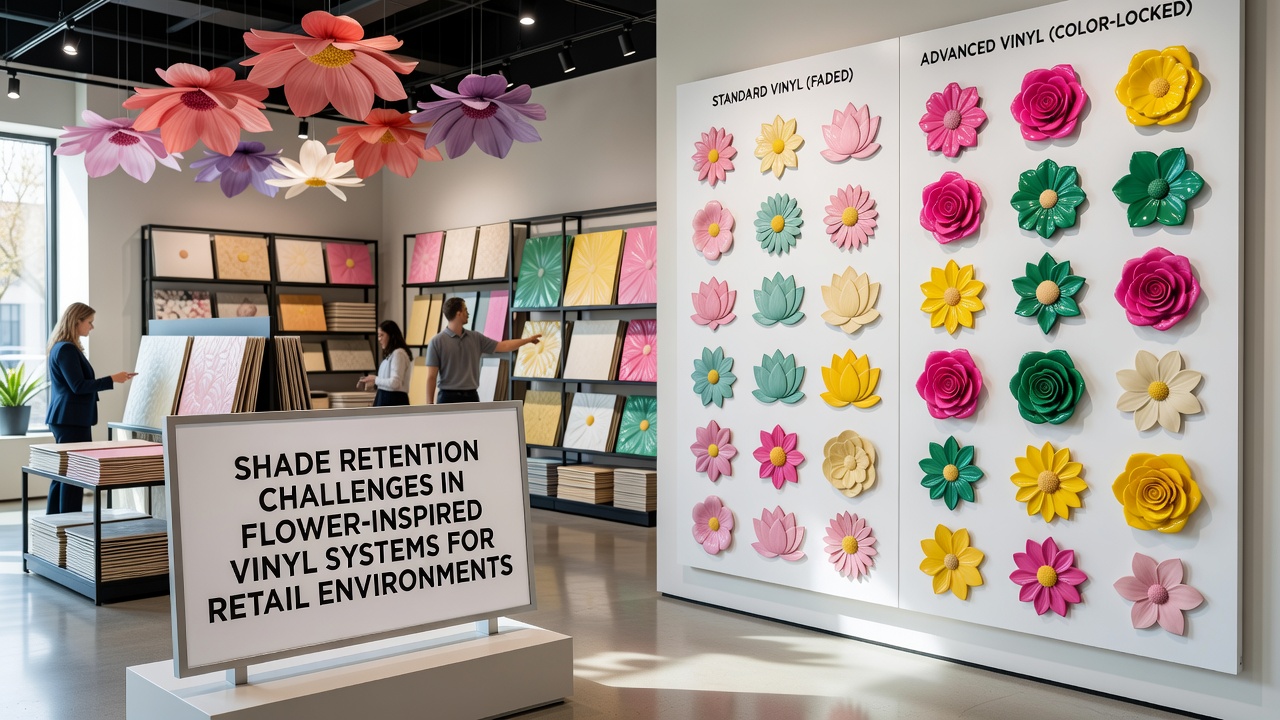
Retail spaces increasingly incorporate flower-inspired vinyl systems that replicate botanical patterns through layered pigments and textured surfaces, yet maintaining consistent shade across these designs presents ongoing technical hurdles for manufacturers and installers alike. These systems rely on specialized printing techniques and stabilizers to mimic natural petal gradients, but exposure to high-traffic conditions and environmental variables often leads to differential fading rates between light and dark floral elements.
Core Factors Affecting Pigment Stability
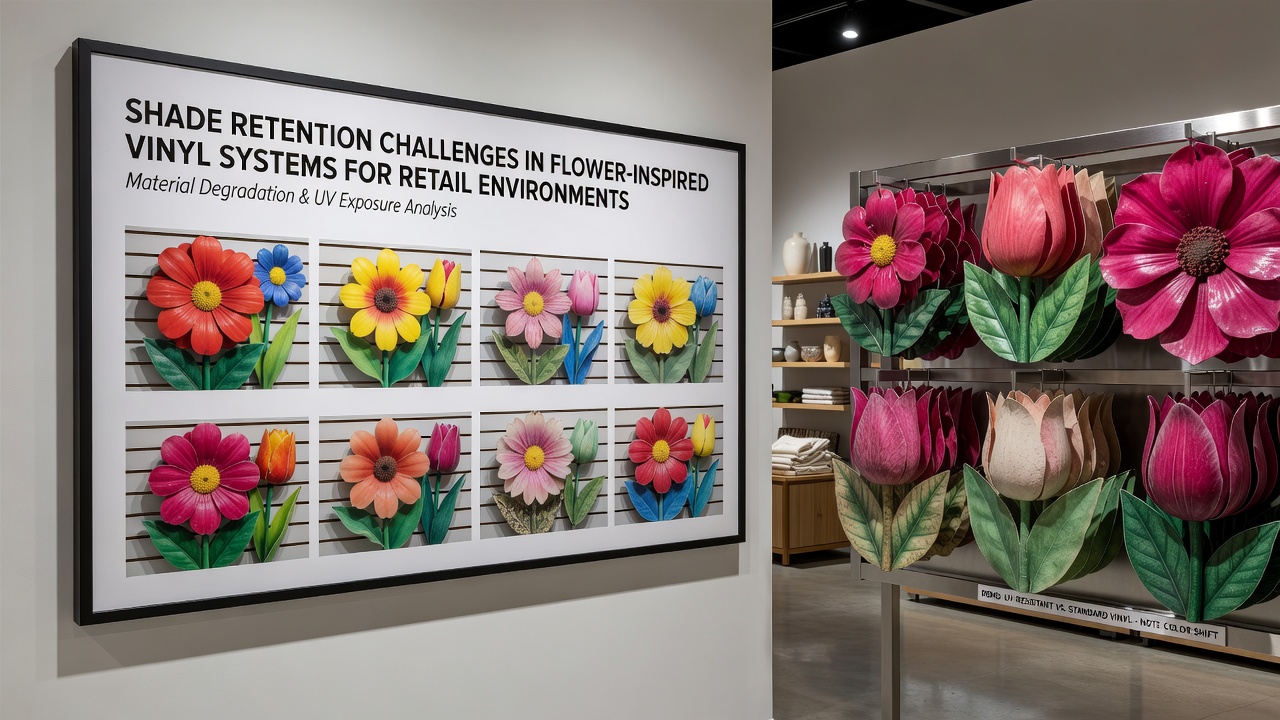
Data from material testing labs shows that ultraviolet radiation accelerates breakdown in organic dyes used for vibrant floral hues, while abrasion from foot traffic compounds the issue by wearing away protective topcoats unevenly. Researchers at the National Research Council Canada documented how temperature fluctuations in climate-controlled retail stores interact with humidity to create micro-cracks in vinyl layers, allowing deeper penetration of cleaning agents that further erode shade consistency over time.
Studies indicate that flower motifs with overlapping color zones suffer the most because adjacent pigments respond differently to the same stressors, producing visible banding or mottling after 18 to 24 months of use. Industry reports from the European Committee for Standardization highlight that vinyl formulations incorporating higher concentrations of UV absorbers demonstrate slower shade drift, although cost constraints limit widespread adoption in budget retail projects.
Retail-Specific Performance Data
Figures from ASTM International testing protocols reveal that vinyl samples subjected to simulated retail foot traffic retain 85 percent of original shade depth in low-light zones but drop to 62 percent in areas near large windows where natural light cycles dominate. Observers note that peak shopping hours in October 2026 coincide with increased seasonal cleaning regimens, which introduce alkaline solutions capable of stripping stabilizers from surface layers and hastening uneven color loss across floral patterns.
One case documented by materials scientists at a major European research institute involved a chain of home goods stores where flower-inspired installations in high-traffic aisles required partial replacement within 14 months due to noticeable shade mismatches between original and replacement sections. These findings prompted several manufacturers to adjust their pigment loading ratios, adding inorganic fillers that improve overall retention without altering the visual depth of printed botanicals.
Testing and Mitigation Approaches
Accelerated weathering chambers used by quality control teams replicate six months of retail exposure in just 72 hours, allowing rapid identification of vulnerable pigment combinations before full-scale production. Results from such protocols show that systems employing multi-layer barrier films maintain tighter shade tolerances across seasonal temperature swings compared with single-coat applications.
Trade organizations recommend routine spectrophotometric monitoring at six-month intervals to quantify delta-E shifts in floral color zones, enabling proactive maintenance rather than reactive repairs. Data collected across multiple North American retail sites confirms that early detection reduces replacement frequency by approximately 30 percent when paired with pH-neutral cleaning schedules tailored to vinyl chemistry.
Emerging Formulation Trends
Manufacturers have begun integrating nano-scale ceramic particles into base resins, which scatter incoming light and reduce direct UV absorption at the pigment level. Laboratory evaluations conducted at Australian research facilities demonstrate that these additives extend effective shade life by an average of nine months under simulated high-UV retail conditions without compromising flexibility or installation characteristics.
Collaboration between pigment suppliers and flooring producers continues to refine dye encapsulation methods that shield delicate floral tones from oxidative agents present in everyday retail environments. Current specifications from international standards bodies now include shade retention thresholds that account for both traffic volume and lighting intensity, providing clearer benchmarks for product certification.
Conclusion
Shade retention in flower-inspired vinyl systems remains a measurable engineering challenge driven by interactions among light exposure, mechanical wear, and maintenance practices common to retail settings. Ongoing refinements in material composition and standardized testing continue to narrow performance gaps, while geographic variations in environmental conditions require region-specific formulation adjustments to sustain visual consistency over extended service periods.